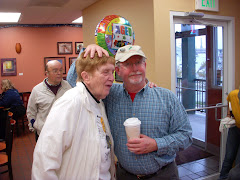
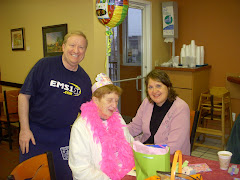
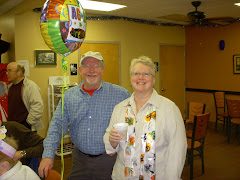
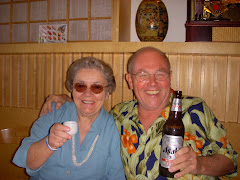
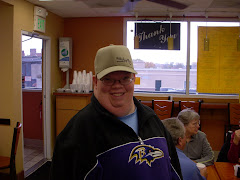
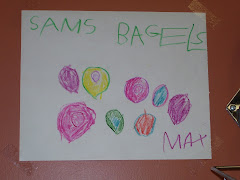
Note Christmas trees in the background for comparison!
Friday, November 28, 2008
Chicago Trip Pictures
Note Christmas trees in the background for comparison!
Why NFL Players Should Keep Their Names Short


Dermatologists advised not to make any rash moves.
but the Neurologists thought the Administration had a lot of nerve,
and the Obstetricians felt they were all laboring under a misconception.
the Pathologists yelled, 'Over my dead body!' while
the Pediatricians said, 'Oh, Grow up!'
the Radiologists could see right through it,
and the Surgeons decided to wash their hands of the whole thing.
and the Plastic Surgeons said, 'This puts a whole new face on the matter.'
but the Urologists felt the scheme wouldn't hold water.
and the Cardiologists didn't have the heart to say no.
Thanksgiving Blessings
Peggy was in today while visiting from Florida, it was great to see her. She reported that Gwen is in the hospital back in Florida for an undiagnosed illness. We all send our get well wishes to her.
Jack turns 80 years old today! He and Gladys stopped in for coffee on their way out to spend some time with their daughter, Cindy.
Glenn and Zach showed up, and Glenn was discussing politics. He looks and sounds better every day. Glenn had sent an email to wish all a Happy Thanksgiving. He shared a most unusual concept: "Two women sitting together, quietly".
Doug recalled going to Lane Bryant to buy a gift for his wife on their first Christmas. He said he tried to describe his petite wife to the saleslady and came home with a garment way TOO big. All these years later, the incident has not been forgotten in his home. Bill W. said he went out to get his wife a 2 x 2, but she really needed a 4 x 4!
Thanks to all of our friends at Sam's for making us laugh.
Tuesday, November 25, 2008
More Holiday Cheer
Sam's will be open on Thanksgiving from 7 am until noon. Put your turkey in the oven and come grab a cup of coffee with your family and friends.
My dear friend, Mary, sent me the greeting below with the attached note: Due to increasing age, forgetfulness, and my decreasing ability to send cards on time here is my card to cover every Holiday!

2008's First Christmas Joke (Thanks to Harold)
Three men died on Christmas Eve and were met by Saint Peter at the pearly gates. 'In honor of this holy season' Saint Peter said, 'You must each possess something that symbolizes Christmas to get into heaven.'
The first man fumbled through his pockets and pulled out a lighter. He flicked it on. 'It represents a candle', he said. 'You may pass through the pearly gates' Saint Peter said.
The second man reached into his pocket and pulled out a set of keys. He shook them and said, 'They're bells.' Saint Peter said 'You may pass through the pearly gates'.
The third man started searching desperately through his pockets and finally pulled out a pair of woman's panties. St. Peter looked at the man with a raised eyebrow and asked, 'And just WHAT do THOSE symbolize?' The man replied, 'These... are Carol's.' ...And, he, too was admitted entrance.
So begins the Christmas Season...
Monday, November 24, 2008
Much To Be Thankful For
- I had a great trip to Chicago and I am thankful to be back home, safe and sound, just in time for my favorite holiday.
- Chuck and Aleta send their Thanksgiving greetings to everyone from Florida. They also sent us the poem and cartoons below to brighten our day.
May your stuffing be tasty
May your turkey plump,
May your potatoes and gravy
Have never a lump.
May your yams be delicious
And your pies take the prize,
And may your Thanksgiving dinner
Stay off your thighs!


- Tom from Las Vegas has sent us a Thanksgiving quiz to test our knowledge of the holiday's origins. He got four answers correct; I got five. See how much you know by clicking the link at http://encarta.msn.com/encnet/features/quiz/quiz.aspx?QuizID=289&qpt=results. Better yet, take the quiz after dinner while in a turkey coma.
- Thanks to Glenn for sending us this link; we are so thankful you are feeling well enough to drive yourself up to Sam's many mornings. For those of you who can't access the actual Catonsville Times, check out the nice article by Kevin Rector at http://www.explorebaltimorecounty.com/business/5065/friendship-perk-bagel-shops-regulars/. The photo in the paper by Sarah Nix also included Doug and Paul. Kevin, you did a good job of pulling together all of those conversations. Thanks for taking the time to talk with everyone and write so thoughtfully!
- Every year for one weekend in December, downtown Baltimore attractions, led by the National Aquarium, drop admission prices to $1 or even less. These discounts drive large crowds to the Inner Harbor, but with all the holiday events going on at Harborplace and the rest of the waterfront, it's a great time to make a trip to the Inner Harbor. This year, the discount weekend will be held December 7-8. Can't beat the price! When else can you get into the National Museum of Dentistry for just a $1? I can't wait!
- American Visionary Art Museum $1 admission Sunday
- Babe Ruth Birthplace & Museum $1 admission Sunday only
- Baltimore Maritime Museum $1 admission (per site) Sunday
- Baltimore Museum of Industry $1 admission both days
- Baltimore Public Works Museum $1 admission both days
- Carroll Mansion $1 admission both days
- Contemporary Museum Free admission both days
- Edgar Allen Poe House and Museum $1 admission Saturday
- Evergreen Museum & Library $1 admission both days
- Homewood Museum $1 admission both days
- Immigration Time Porthole $1 admission both days
- Irish Railroad Workers Museum & Shrine Free admission Saturday
- Maryland Science Center $1 admission both days (exhibit hall only)
- National Aquarium in Baltimore $1 base admission both days 10am- 4pm
- National Museum of Dentistry $1 admission both days
- Phoenix Shot Tower $1 admission both days
- Port Discovery, the Children’s Museum in Baltimore $1 admission Sunday
- The Rectory Free admission Saturday
- Reginald F. Lewis Museum of Maryland African American History & Culture $1 admission both days
- Robert Long House $1 admission both days
- Sports Legends Museum at Camden Yards $1 admission Saturday only
- Top of the World Observation Level $1 admission both days
- USS Constellation Museum $1 admission Sunday
- Walters Art Museum Free admission both days to the permanent collection
- Washington Monument & Museum Free admission both days
Wednesday, November 19, 2008
Glenn's Back!
- The BIG news is that Glenn is back! Welcome back, Glenn! Lolly brought him in yesterday on his way to get a sexy new haircut.
- Kevin's article is due out in the Catonsville Times today, so check it out. I will be in Chicago so please save a copy for me.
- On a sad note, the Foster's friend, Vicky, a gentle lady who always wore a different hat, passed away this week. We are sorry for your loss. She came to Sam's to see the Fosters and other friends two Sundays ago; I left before she arrived and missed getting her in a photo. Sadly, she was too weak to make it back into her home after breakfast and was hospitalized; she never left the hospital again. Sam's was the last place she visited. The sense of community found in a bagel shop is powerful; don't take for granted laughing over a cup of coffee with your friends.
- Be good, have fun and I will see you next week.
Tuesday, November 18, 2008
Sam's does not discriminate against other baked goods.
Sad News.
Please join me in remembering a great icon of the entertainment community. The Pillsbury Doughboy died yesterday of a yeast infection and trauma complications from repeated pokes in the belly. He was 71.
Doughboy was buried in a lightly greased coffin. Dozens of celebrities turned out to pay their respects, including Mrs. Butterworth, Hungry Jack, the California Raisins, Betty Crocker, the Hostess Twinkies, and Captain Crunch. The grave site was piled high with flours. Aunt Jemima delivered the eulogy and lovingly described Doughboy as a man who never knew how much he was kneaded.
Doughboy rose quickly in show business, but his later life was filled with turnovers. He was not considered a very smart cookie, wasting much of his dough on half- baked schemes. Despite being a little flaky at times, he stillwas a crusty old man and was considered a positive roll model for millions.
Doughboy is survived by his wife Play Dough, three children: John Dough, Jane Dough and Dosey Dough, plus they had one in the oven. He is also survived by his elderly father, Pop Tart. The funeral was held at 3:50 for about 20 minutes.
If this made you smile for even a brief second, please rise to the occasion and take time to pass it on and share that smile with someone else who may be having a crumby day and kneads a lift.
A Short History of the Bagel
A Short History of the Bagel From Ancient Egypt to Lender's.
By Joan Nathan
Posted Wednesday, Nov. 12, 2008, at 7:00 AM ET
When my family first moved to Larchmont, N.Y., in 1946, my father had a feeling that the neighbors living behind us were Jewish. In those days, you didn't broadcast your religion, so he devised a plan that would reveal their cultural background. We would go to the Bronx and bring back some bagels. If our neighbors knew what the rolls were, they were Jewish. If they stared at them in bewilderment, we would know they were not. To my father's delight, as soon as our neighbors saw the bagels, they recognized them. Nowadays, dad's devious plan to determine a neighbor's religion wouldn't work. After all, who doesn't know what a bagel is? But what are the origins of this once-mysterious bread, and what happened between 1946 and today that turned the bagel into a trans-cultural and all-American breakfast bun?
After years of research on Jewish food in America, I thought I had discovered all there was to know about the bagel and its journey. But then I read Maria Balinska's lively and well-researched book, The Bagel: The Surprising History of a Modest Bread. Her book has filled in many of the questions I had about the bagel and raised new ones, too.
The basic roll-with-a-hole concept is centuries old. No surprise, really, as there's a practical advantage to this design—it's possible to thread such a roll on a stick or a string, facilitating transport. Balinska identifies several possible candidates for the ur-bagel from around the world, including the taralli—hard, round crackers flavored with fennel that have been the local snack for centuries in Puglia, Italy. She also mentions the Roman buccellatum and the Chinese girde but neglects to note that even the ancient Egyptians had a bagellike treat. Just a few weeks ago, I came across Egyptian hieroglyphics at the Louvre in Paris, and among the depictions of daily life were rolls with a hole.
The evidence suggests that the first rolls with a hole, those of ancient Egypt and of the greater Mediterranean, came in two types: the soft, sesame-studded variety, called bagele in Israel today, eaten plain or dipped in za'atar (a spice combination of wild oregano, sesame seeds, and salt); and a pretzellike crispy Syrian ka'ak flavored much like taralli. Neither is boiled, a distinguishing characteristic of American bagels.
Polish-born and half-Jewish, Balinska, who works at the BBC in London, tells us that the boiled and baked bagel as we know it comes from her homeland. She tells the story of the Krakow bagel, which was a product of the 1683 Battle of Vienna. Although the story is completely speculative and perhaps even fictitious, it is a piece of gastronomic lore that has endured throughout the ages. As the story goes, 17th-century Poland was the breadbasket of Europe, and King Jan Sobieski was the first king not to confirm the decree of 1496 limiting the production of white bread and obwarzanek (bagellike rolls whose name derives from a word meaning "to parboil") to the Krakow bakers guild. This meant that Jews could finally bake bread within the confines of the city walls. Furthermore, when Sobieski saved Austria from the Turkish invaders, a baker made a roll in the shape of the king's stirrup and called it a beugel (the Austrian word for stirrup). As Balinska says, "Whatever its origin, the story of the bagel being created in honor of Jan Sobieski and his victory in Vienna has endured."
But the bagel has endured through the centuries not only because of its heroic legend. It also had the advantage of lasting longer than freshly baked bread because the boiling gave the roll an outer sheen and a crunchy, protective crust. As Balinska points out, if it got slightly stale, it was dunked in hot liquid to soften it. Once bagels became popular in Krakow, the Jewish bakers began making them in their own bakeries due to the strictness of Jewish dietary laws.
It is unclear when the first bagels made their way to the United States, but 70 bakeries existed on the Lower East side by 1900. In 1907 the International Beigel Bakers' Union was created and from then on monopolized bagel production in New York City. What is also certain is that immigrants from Eastern Europe, with their cravings for the foods of the old country, sparked the New York bagel craze. Balinska explains that the Jews of the Lower East Side created a demand for the breads of their homeland—rye, challah, and bagels.
The '50s were a turning point. It was after World War II, and Americans were trying to get back to normalcy and reconcile the atrocities of the war. They were, for the first time, somewhat philo-Semitic. In addition, Jews were rapidly assimilating, moving to other parts of the city, expanding their culinary horizons, and sharing their own culinary traditions with the rest of New York.
In the early 1950s, Family Circle included a recipe for bageles (their spelling). The copy read: "Stumped for the Hors d'oeuvres Ideas? Here's a grand one from Fannie Engle. 'Split these tender little triumphs in halves and then quarters. Spread with sweet butter and place a small slice of smoked salmon on each. For variations, spread with cream cheese, anchovies or red caviar. (They're also delicious served as breakfast rolls.)' " Engle, who later wrote The Jewish Festival Cookbook, did not mention the Jewish Sunday morning ritual of lox, bagel, and cream cheese—an American concoction that was just taking off, spurred on most probably by Joseph Kraft's advertising blitz for Philadelphia Cream Cheese. It soon became an American alternative to the other Sunday trilogy of bacon, eggs, and toast. In 1951, the bagel made a big appearance in the Broadway comedy Bagel and Yox, introducing the word bagel into such mainstream magazines as Time. Balinska says that "one of the attractions of Bagel and Yox was the fact that freshly baked bagels and cream cheese were handed out to the audience during intermission."
At this historical moment, Murray Lender hit upon a method for mass distribution of bagels. His father, Harry, had come from Poland to New Haven, Conn., and had opened a wholesale bagel bakery in 1927, one of the few outside of New York. In this small, diverse town, ethnic communities intermingled, sampling one another's local specialties. After a while, Balinska explains, it became clear to the Lenders that the Jewish bagel was just as appetizing to the Irish and the Italians as it was to the Jews. The turning point came when Murray, having returned from the Korean War in 1956, bought a freezer. He and his father soon realized that they could deliver thawed bagels to retailers without marring their flavor. A subsequent innovation was the packaging of bagels in batches of six in polyethylene bags, making them even more durable. Soon, Lender's Bagels shared shelf space in supermarkets with household names like Pepperidge Farm and Wonder Bread. Over the next decade, supermarket sales did nothing but grow. And with the advent of the frozen-food aisle, frozen bagels became an affordable, convenient food that could be shipped to grocery stores in far-flung parts of the country that had never before seen one.
Bagelmania hit the ground running in this country with chains opening up all over the place, replacing, to a certain extent, the doughnut shops of the earlier part of the 20th century. (Today, America's most popular doughnut shop, Dunkin' Donuts, also sells bagels.) It is my suspicion that bagels became so popular because, unlike Mexican burritos or Chinese egg rolls, they don't taste ethnic. They weren't marketed as Jewish and weren't sold in kosher sections of grocery stores. To the bread- and sandwich-loving American population, the bagel was simply another bun with a bite—different enough to satisfy a craving for innovation, but not different enough to appear exotic.
So, it makes sense that today's bagel bakeries are not necessarily Jewish-owned or run. A Puerto Rican family owns H&H Bagels in New York. John Marx, a Cincinnatian of German background, bakes 36 different bagel varieties, including Cincinnati Red bagels, tropical fruit, and taco bagels. And the best bagel bakery in New York, according to many, is one owned by a Thai couple on the Upper West Side.
Bagels are clearly no longer specifically a Jewish food. At some point in the middle of the 20th century, their position from the Jewish bun to the American breakfast bread shifted. The exact moment is unclear, but one moment stands out in my mind. In 1998, when I was first filming my PBS television series, Jewish Cooking in America, Lender's, which by then had been bought and sold numerous times, was one of our sponsors. For this cooking show featuring kosher food, they sent us an underwriting spot depicting a perfectly toasted bagel with Swiss cheese and ham! Oy! I almost plotzed. To me, that moment was the ultimate assimilation of the bagel into American life.
Joan Nathan, a contributor to the New York Times food section, is the author of Jewish Cooking in America and eight other cookbooks. She likes poppy-seed bagels with the center hollowed out and toasted with butter.
Sue adds that maybe we should stop teasing Doug about hollowing out his bagels now!
Friday, November 14, 2008
Thursday Morning
- We had a good turn-out on Thursday morning for the Catonsville Times reporter, Kevin, and photographer, Sarah. They were both very professional and kind. It will be interesting to see what they gleaned from our conversation. The article is scheduled to apear in the paper next week.
- I missed part of the conversation when I discovered that I had a flat tire. Thanks to everyone who helped get the first tire off and put on the temporary tire. Thanks also to Mom and Dad who got the car to Mr. Tire for me just before the rains began.
- Can't believe I missed taking a photo of Kevin and Sarah.....must have gotten off track with the flat tire adventure.
- Saw Jeff coming into Sam's as we were all leaving. I told Jeff that he had missed being interviewed. He said he hadn't missed it, he was having lunch with Sarah the photographer!
Wednesday, November 12, 2008
Grant Park Photos
Tuesday, November 11, 2008
Veterans Day Salute
I suggest you should add a post to the blog about Veterans Day. I know that Paul and Jack are veterans and I am sure some of the other Sam's regulars are as well. Plus a wish or prayer for those that we love that are still fighting for the USA may they come home safe to have years to enjoy bagels and friends.
Alicia
Great idea, Alicia. I know that Bill T. also served in Viet Nam. This editorial appeared on the official VFW website today.
Thanks to our Veterans Every War Has an End: Upholding Veterans Day
An Editorial by VFW National Commander Glen Gardner
Remembering America’s warriors is often an afterthought for many Americans. It’s about time Nov. 11 is paid its proper respect.Veterans Day, once a widely celebrated holiday, is increasingly forgotten by many Americans. One need only look at the poor turnouts at ceremonies on Nov. 11. With the percentage of citizens who have worn a uniform rapidly declining, appreciation for the sacrifices made by veterans is correspondingly diminishing.To help counter this trend, VFW has long promoted Veterans Day as an opportunity to educate the public as to the meaning of this significant time each November. This task can best be accomplished by explaining the five “Ws.”
Who. As a nation, we remember all Americans who served on active duty in the armed forces. While those who died always remain prominent in our memories, they have a special time of mourning reserved for Memorial Day. Veterans Day is an opportunity to publicly commemorate the contributions of living veterans.
What. Collective as well as individual contributions to the nation’s defense are what we are remembering. The outcome of any given military campaign is irrelevant here—it’s the sacrifices made at the behest of the country that are important.
Where. Across the land, the grounds of virtually every state capitol and county courthouse host monuments, memorials and plaques honoring those who served. They date back as far as the American Revolution and are as recent as the Iraq War. But paying homage to veterans need not necessarily be in a public place. Every private home also should serve this purpose when appropriate.
When. For some Americans, remembering veterans is a daily act. But as a nation, it is essential that we preserve the integrity of Nov. 11 as that one extra-special day for the American people as a whole to pause in silence or demonstrate public recognition.
Why. Remembering gives true meaning to sacrifice and service. Millions of Americans’ lives were forever altered because they donned a uniform to protect the freedoms and rights we take for granted. We owe an eternal debt of gratitude to them. And acknowledging Veterans Day is the time that debt comes due. It’s our way of keeping faith.
All of this is particularly relevant now, with the nation at war in Afghanistan and Iraq. Nearly 4,800 Americans have been killed in the two war zones to date. Approximately 1.7 million tours have been logged so far with 600,000 individuals having served there. About 325,000 of them have used VA benefits and services. Many, present as well as past, have displayed exceptional courage on the battlefield, as this month’s issue clearly illustrates.The 23.8 million veterans living in America deserve the recognition. It is often forgotten that legislative battles were waged over this day and its earlier version called Armistice Day in 1926, 1938, 1954 and throughout the 1970s. Let’s not take its value for granted.
Catonsville Times Reporter at Sam's
Kevin from the Catonsville Times will be at Sam's this Thursday morning, November 13th, between 8 and 9 am. He wants to talk with all of the regulars. He is bringing a photographer too! Please try and arrange your schedules to make this special occasion, especially the weekend regulars.
An Intriguing Email
My name is Kevin Rector, and I'm a reporter at the Catonsville Times.
I came across the blog and thought it - and your group of friends at the shop - would make an interesting story for the paper.
I was hoping to get in touch with Sue, and then maybe visit the bagel shop and meet some of the folks who make up your seemingly tight knit group over there.
Best,
Kevin Rector
The Catonsville Times
Wednesday, November 5, 2008
An Historic Election
The Big Pranksters
The guys call Dimitri over to accuse Patty of stealing.
Monday, November 3, 2008
Reflections of China
We had lunch with two families and stayed overnight with a family in a farmers' painting village. This provided an opportunity to see the Chinese people in everyday surroundings.
The Chinese food was delicious and easier to eat as we became more proficient using chopsticks!! Lots of vegetables in a variety of sauces--and some meat included in those dishes. We usually had soup and rice with each meal. (No bagels for breakfast!) We even had a Yak burger (with fries) in Tibet--quite a tasty treat!! Very little sweets or desserts, bread, or dairy products. We knew it was the end of the meal when watermelon and melon were served.
Early in the morning (6AM) one could see people doing Tai Chi in the park, playing badminton and participating in other forms of exercise. In the afternoon and evening the groups of people gathered to dance in the park. In the park it was common to see people playing Mahjong or cards with intense competition and spectators taking it all in.
We visited a Kung Fu School (some of the boys were a part of the Olympic opening ceremonies which the boys said was a lot of hard work). Visiting a silk factory, silk carpet factory, cloisonne factory, jade showroom and a lacquerware showroom provided an opportunity to learn about the production of these goods--and, of course, opportunity for retail therapy!!
One of the memorable visits was to an orphanage in Tibet. While there, we were serenaded with "You are My Sunshine" and "If You're Happy and You Know It". In return, we sang a song for them "Frere Jacque" in French, English and Chinese. The children happily showed us their living quarters (very sparse) and various rooms in the orphanage.
All in all a memorable experience which gave us all an appreciation for all that we have available to us--so many times taken for granted!!
Barbara and Chuck Knauf